About Us
Unlocking Leadership Potential
Through Strategy, Science & Handwriting
Unlocking Leadership Potential Through Strategy, Science & Handwriting
We Are A Premium Leadership and Personality Assessement Company
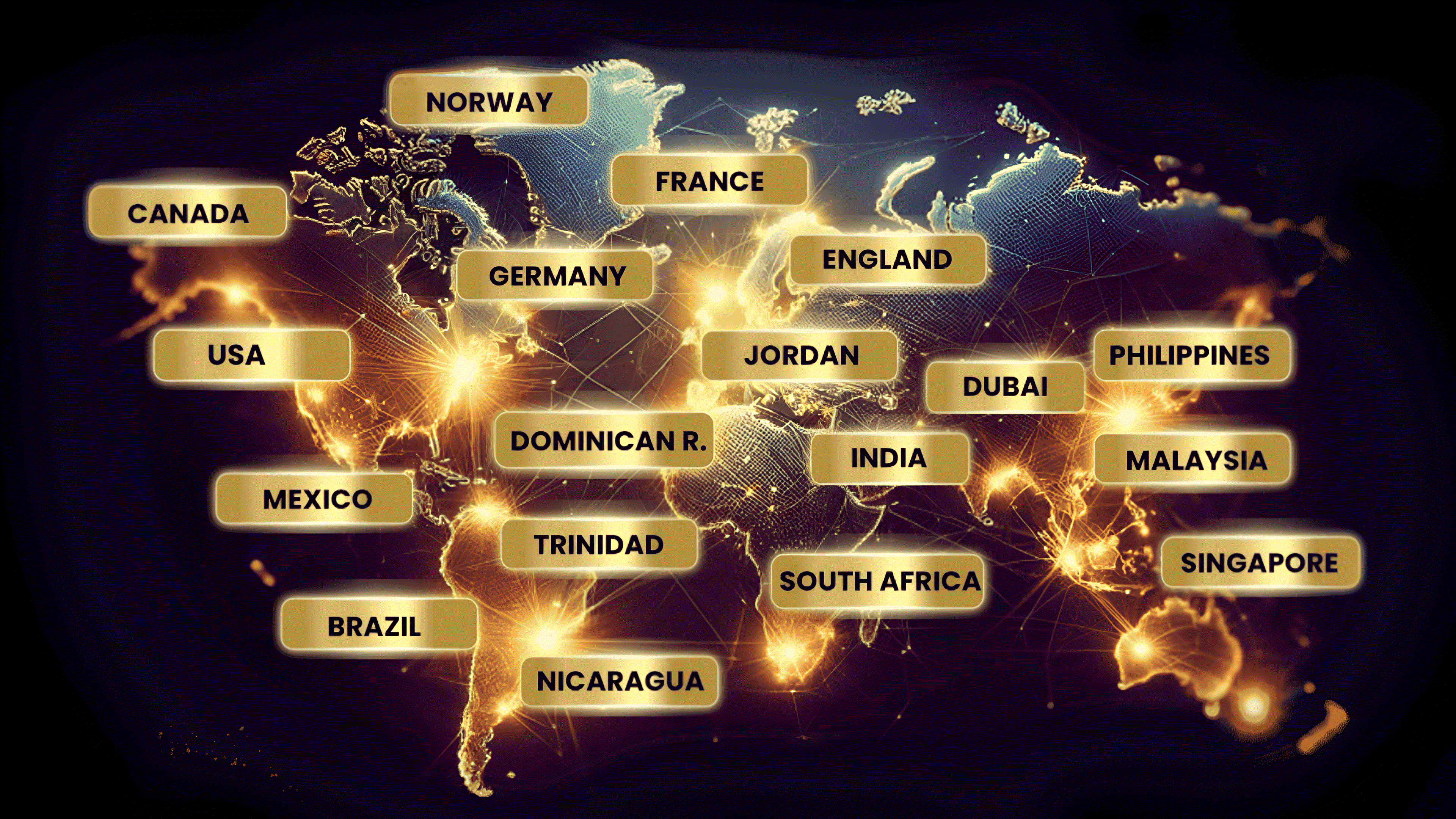
We decode and elevate talent and help supercharge teams. We've served 30 countries so far and are growing rapidly.
We help leaders, teams, and boards uncover what's truly holding them back — and develop the traits needed to lead with clarity, confidence, and calm execution.
Our expertise lies in identifying deep behavioral patterns — especially the hidden ones that surface in communication, decision-making, and leadership under pressure.
Our Services
We provide specialized offerings to enable speedy hiring, leadership acceleration and individual performance enhancement
Our Unique Approach
We combine leadership strategy, behavioral science, and advanced handwriting analysis to reveal the link between a leader’s inner mindset and their outward results.
Instead of relying solely on interviews, surveys or questionnaire's, we use handwriting based behavioral profiling to get a deeper and more accurate view of personality traits and potential.
This unique blend of methods allows us to:
Pinpoint strengths and weaknesses with precision
Address mindset blocks that affect leadership effectiveness
Build tailored development plans that create measurable impact
Elevating Leadership Transforming Results
Unlock the hidden patterns that shape performance in your organization — from the C-suite to emerging leaders.
MEET OUR FOUNDER
Anagha Deshmukh
Leadership Strategist
Internationally recognized expert in leadership transformation. Blending engineering insight with executive experience, she helps organizations uncover the hidden traits that drive performance.
Executive Advisor
Her work supports Fortune 500 companies and emerging enterprises alike in building smarter, faster, and future-ready leadership teams.
Keynote Speaker
She is also a sought-after speaker at leadership forums, business podcasts, and high-level corporate events—and is currently working on her debut book focused on the future of executive leadership.
Because leadership isn’t just about roles—it’s about traits. And most of them are invisible.
Because leadership isn’t just
about roles—it’s about traits.
And most of them are invisible.
Elevating Leadership. Transforming Results.
Unlock the hidden patterns that shape performance in your organization — from
the C-suite to emerging leaders.
Insights & Ideas
Leadership that moves the needle—one trait at a time
Explore Anagha’s latest thinking on executive performance, team alignment, leadership strategy, and the future of talent. These blog articles offer bite-sized breakthroughs and deep dives alike—created for decision-makers who don’t settle for surface-level leadership.
The Leadership Traits That Actually Predict Performance (and the Ones We Keep Teaching Anyway)
The Leadership Traits That Actually Predict Performance (and the Ones We Keep Teaching Anyway)
If you've sat through a leadership offsite in the last decade, you already know the list. Vision. Integrity. Communication. Emotional intelligence. Resilience. Adaptability. It's the same fortune-cookie wisdom dressed in different fonts, recycled from a 1989 Harvard Business Review article that nobody bothered to update when the world changed.
Here's the uncomfortable truth: most of what gets taught as "leadership traits" is a description of likable people, not effective ones. And when you actually look at the research — not the LinkedIn-influencer version of it — the gap between what we teach and what works is wider than anyone in this industry wants to admit.
Let's get into it.
The "Good Leader" trap
A study released in early 2026 found that 54% of U.S. employees rate their senior leader as "good." Sounds fine, until you read the second half: those same employees report they don't feel valued, don't feel heard, and don't feel able to reach their full potential at work.
"Good" is the most dangerous rating in leadership. It means you're competent enough that nobody's filing complaints, and forgettable enough that nobody's following you anywhere new. Most executive development programs are factories for producing "good" leaders — people who check the trait boxes, present well, and never actually move the needle.
If your 360 came back glowing last quarter, that might be the problem.
What the research actually says
Decades of meta-analytic research on the Big Five personality traits — openness, conscientiousness, extraversion, agreeableness, and emotional stability — keep producing the same finding: conscientiousness is the most consistent personality predictor of leadership effectiveness. Not charisma. Not vision. Conscientiousness. The unglamorous trait of doing what you said you'd do, when you said you'd do it, to the standard you said you'd do it.
This is wildly out of sync with how we promote people. Boards fall for charisma. Search firms reward presence. Founders mistake intensity for judgment. And then we wonder why the new CEO's first 18 months look like a slow-motion car crash.
The other trait that keeps surfacing in serious research is what Leadership Worth Following calls leadership capacity — the ability to think clearly, solve complex problems, and stay effective under pressure. Note what's not in that definition: warmth, likability, storytelling. Those are nice. They're not what predicts whether you can run a $500M P&L through a geopolitical shock.
The three traits that actually matter at the top
After cutting through the noise, three traits consistently separate executives who compound value from executives who just collect titles:
1. Steady judgment under uncertainty. Not the ability to be right. The ability to make a sequence of defensible decisions when you can't be sure, take responsibility for the ones that go wrong, and update without flinching. This is the trait that AI cannot replicate and that boards consistently underweight in hiring.
A useful gut check: when was the last time you publicly changed your mind on something that mattered? If the answer is "I can't remember," that's not consistency. That's brittleness.
2. Earned trust, not borrowed authority. Title trust is on loan from the org chart. Earned trust is the only kind that survives the first crisis. The leaders who hold organizations together during downturns, restructurings, and AI-driven role redesigns are the ones whose people would still take their call after they left the company. Almost everything else — strategy, comms, even compensation design — is downstream of this.
3. The capacity to absorb consequence. McKinsey put it bluntly in a January 2026 piece: AI can inform decisions, structure tradeoffs, and surface risk, but it does not own consequences. It cannot reconcile competing values, absorb blame, or stand in front of a board when outcomes fail.
That's the job now. Not "deciding" — algorithms can help with that. Owning the consequence. The willingness to be the human signature on a hard call is rarer than the industry pretends, and it's about to become the single most valuable executive trait of the decade.
What this means for how you develop leaders
If conscientiousness, judgment, and trust-earning are the traits that matter, then most leadership development is solving the wrong problem. You can't fix conscientiousness with a two-day offsite. You can't manufacture judgment with a framework. And you definitely can't earn trust by attending a workshop on it.
What actually works, in our experience and the research:
Reps under pressure. Stretch assignments with real downside, not curated "leadership opportunities" where the safety net is obvious. Judgment is muscle tissue. It grows under load.
Honest mirrors. Most executives don't need more coaching. They need one person in their life who will tell them the truth without political consequence. Build that relationship. Pay for it if you have to.
Boring consistency over heroic effort. The leaders who compound trust are not the ones who show up brilliantly once a quarter. They're the ones whose tenth follow-up looks like their first.
Subtraction, not addition. Most senior leaders don't need to add a new trait. They need to identify the one default behavior that's costing them — the interrupting, the over-explaining, the avoidance of conflict, the optimism that reads as denial — and remove it. One subtraction usually does more than five additions.
The question worth asking
Forget "what kind of leader do I want to be." That's a vision-board question and it produces vision-board answers.
Try this instead: If the people who report to me described my leadership to a peer at another company over a drink, what would they actually say? Not what I'd want them to say. What would they say?
If you flinched reading that, good. That's where the work is.
The traits that look great on a coaching report and the traits that move organizations are not the same set. The executives who figure out the difference — and have the stomach to act on it — will be the ones running things in five years.
The rest will still be "good."
About the author
Anagha Deshmukh is a Leadership and Handwriting Expert who works with senior executives on the parts of leadership that don't fit on a slide — judgment, presence, and the quiet behavioral patterns that shape how people lead under pressure. Connect with her on LinkedIn.

Ready to Achieve MORE, BETTER, FASTER results?
Let's discuss how we can transform your leadership team and organizational culture
for long-term success.
Let’s discuss how we can transform your leadership team and culture for long-term success.
Serving 24 Countries